10 This section of the WHO eManual outlines the general policies and procedures for mobilizing resources (financial, in-kind and in-service contributions).
This covers all stages of the process:
Reference should be made to the
CRM Standard Operating Procedures: Resource Mobilization and Awards Process.
[CRM.SOP Resource Mobilization and Awards Process V.6 2 September 2022.pdf]
20 In February 2020, the WHO Executive Board noted the
WHO Resource Mobilization Strategy (EB146/29), which rests on the four pillars as outlined in figure 1 below.
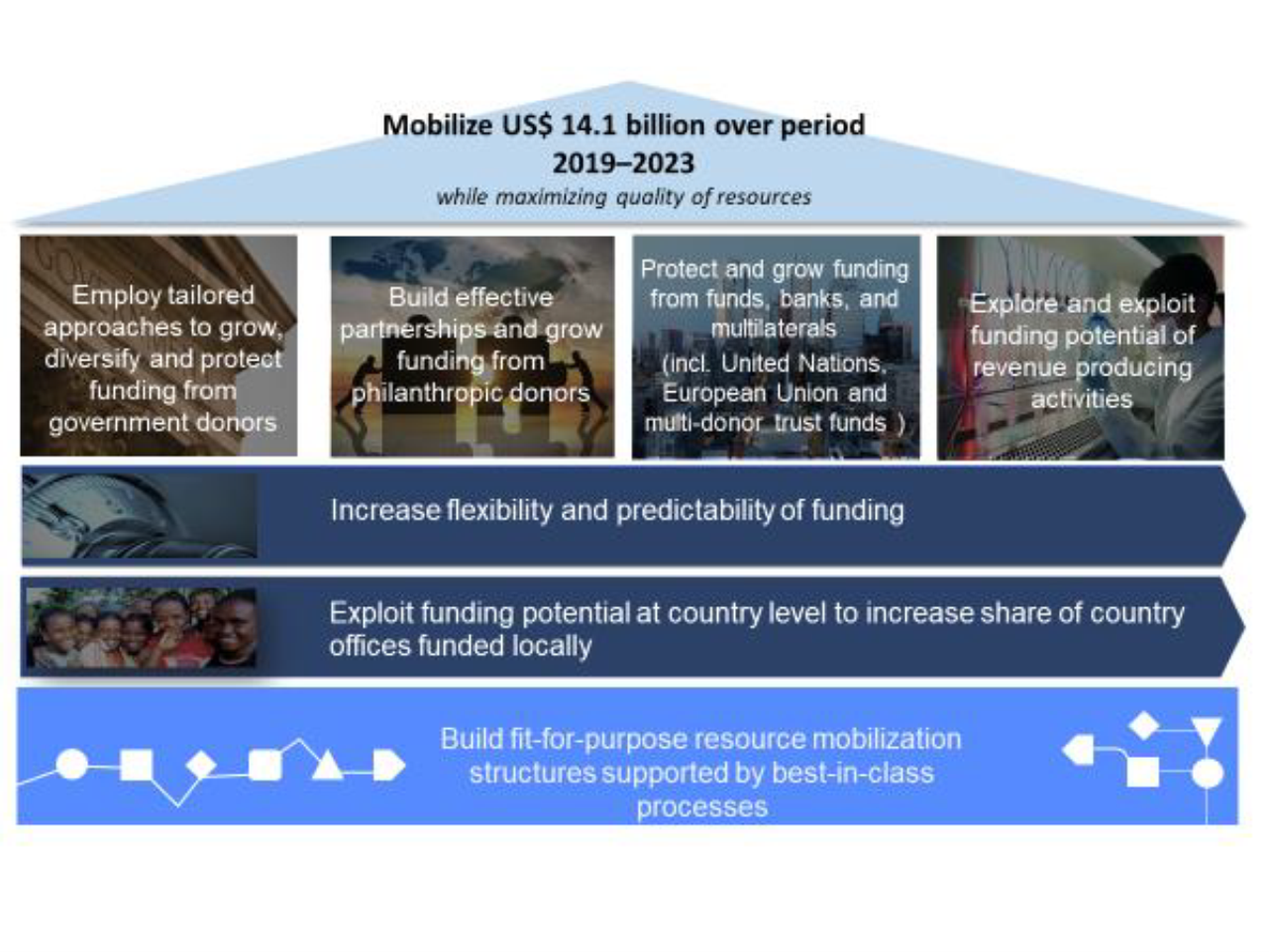
figure 1: Four pillars of WHO's Resource Mobilization Strategy
Voluntary contributions may be accepted "provided that the Director-General has determined that such contributions can be utilized and that any conditions which may be attached to them are consistent with the objective and policies of the Organization" (WHO Financial Rules, VIII.1). Potential donors include:
Member States, in particular their governmental entities and agencies;
United Nations organizations;
Intergovernmental organizations outside the United Nations system;
Nongovernmental organizations, including but not limited to those in official relations with WHO;
Private foundations;
Commercial enterprises, including associations representing commercial enterprises and foundations not at arms' length of their commercial sponsors (subject to the WHO Guidelines on Interaction with Commercial Enterprises: Annex to EB 107/20) ;
Individuals.
30 The WHO RM Strategy is underpinned by the introduction of the Contributor Engagement Management (CEM) system as a global strategic asset for the management of RM processes across the three levels of the Organization using a best-in-class platform.
40 Information Note 14/2021 outlines the new RM process on management of voluntary contribution proposals, agreements and awards using the CEM system. This includes all voluntary funds raised across WHO, as well as in-kind and in-services contributions and funds allocated to procurement covering both programme budget and non-programme budget funds.
50 The WHO Resource Mobilization Strategy contains two cross-cutting themes: increased predictability and flexibility and a greater focus on fundraising at country level, where increased potential and more opportunities to drive impact are foreseen. These themes are underpinned by ongoing work to strengthen functional coordination within WHO and improve partnership management by investing in more professional processes, better donor analytics and a proven Contributor Engagement Management system.
60 There are four key principles for resource mobilization activities across the Organization:
WHO mobilizes resources for health for the implementation of activities as determined by the World Health Assembly (WHA), and as outlined in the WHO Resource Mobilization Strategy (EB146/29). On approval of the biennial Programme Budget, the WHA authorizes the Director-General to mobilize funds for the Programme Budget. As such, all proposals must demonstrate clear alignment with WHO’s General Programme of Work and Programme Budget results.
WHO staff are responsible for mobilizing resources in a transparent and coordinated manner in line with the WHO Resource Mobilization Strategy, supported by the Department of Coordinated Resource Mobilization (CRM), Division of External Relations and Governance (EXT) and/or Regional RM focal points, and in compliance with RM policies and standard operating procedures as well as WHO’s rules concerning Delegation of Authority.
To the extent possible, contributions are negotiated with contributors to ensure maximum flexibility and predictability.
All resources mobilized are implemented as agreed between WHO and the contributor, as reflected in the contributor agreement, including distribution, funding and budgeting on a timely basis across departments and the three levels, as appropriate, ensuring timely delivery of results, quality reporting, contributor recognition and visibility.
70 Voluntary contributions may be accepted "provided that the Director-General has determined that such contributions can be utilized and that any conditions which may be attached to them are consistent with the objective and policies of the Organization" (WHO Financial Rules, VIII.1). Potential donors include: • Member States, in particular their governmental entities and agencies; • United Nations organizations; • Intergovernmental organizations outside the United Nations system; • Non-State Actors: non-governmental organizations; private sector entities, philanthropic foundations and academic institutions, as defined under the Framework of Engagement with Non-State Actors (FENSA) [https://apps.who.int/gb/ebwha/pdf_files/wha69/a69_r10-en.pdf]..
80 Financial and in-kind contributions from non-State actors may be acceptable as long as such contributions align with WHO’s General Programme of Work and Programme Budget, do not create conflicts of interest, are managed in accordance with the risk assessment and due diligence requirements under the Framework on Engagement with Non-State actors, and the relevant WHO policy and operational procedures on managing engagement with non-State actors - see eManual, Part XVIII, and other relevant WHO rules, policies and guidelines. The acceptance of contributions (whether in cash or in-kind) is subject to certain conditions.
90 Special care should be exercised for offers of contributions from private sector entities, including pharmaceutical companies, in view of the possibility of a conflict of interest, and so as to ensure that the donation is not of a promotional nature and will not be used by the entity for promotional and/or commercial purposes. The level of risk associated with the acceptance of resources from private sector entities depends on the field of activity of the entity, the WHO activity for which the resources are used and the modalities of the contribution.
100 Note that financial contributions may not be sought or accepted from private sector entities that have themselves or through affiliated entities, a direct commercial interest in the outcome of the project towards which they would be contributing, unless approved in conformity with the provisions for clinical trials or product development. The Framework of engagement with non-State actors its Policy and Operational Procedures on Engagement with Private Sector Entities sets out the principles and conditions for accepting resources from private sector entities and should be consulted.
110 Special care should be exercised for offers of contributions from commercial enterprises, including pharmaceutical companies, in view of the possibility of a conflict of interest, and so as to ensure that the donation is not of a promotional nature and will not be used by the donor for commercial purposes.